

Key Takeaways
- Adaptive firewalls offer real-time, intelligent responses to evolving cyber threats.
- They leverage technologies like machine learning to detect and automatically mitigate advanced attacks.
- Adoption brings clear benefits, but implementation complexity and false positives remain challenges.
- Future innovations will further blend adaptive firewalls with AI, cloud platforms, and zero-trust architecture.s
Table of Contents
- Understanding Adaptive Firewalls
- Key Features of Adaptive Firewall Solutions
- Benefits of Implementing Adaptive Firewalls
- Challenges in Deploying Adaptive Firewalls
- Case Studies: Successful Implementations
- Future Trends in Adaptive Firewall Technology
- Conclusion
Understanding Adaptive Firewalls
In an era dominated by sophisticated and ever-evolving cyber threats, enterprises need more than just traditional security measures. Static firewall systems, though once sufficient, struggle to provide comprehensive protection against threats that bypass standard, rule-based defenses. This vulnerability has paved the way for adaptive firewalls—cutting-edge solutions designed to recognize, analyze, and respond to threats in real-time.
Unlike traditional firewalls that rely solely on fixed rules, adaptive solutions utilize artificial intelligence and machine learning to scrutinize network traffic continuously. They detect anomalies and respond automatically to suspicious behavior, bolstering defenses against both known threats and previously unseen attacks such as zero-day exploits. For organizations seeking an enterprise-ready solution, exploring platforms like https://versa-networks.com/products/next-generation-firewall/ can provide a valuable starting point for integrating next-generation firewall technology into their infrastructure.
Adaptive firewalls have become essential in today’s digital landscape, where attackers frequently employ automated, intelligent methods to compromise networks. The ability to not only detect but also react autonomously marks a significant upgrade from earlier forms of firewalls. As enterprises expand and interconnect, having a firewall that evolves with the ever-changing threat landscape is critical to maintaining a reliable defense.
By constantly learning from global threat intelligence and local network behavior, adaptive firewalls strengthen their detection and mitigation strategies. This results in a dynamic barrier that becomes more effective over time. Leading tech publications, such as CSO Online, provide further insight into the vital role firewalls play in organizational security.
Key Features of Adaptive Firewall Solutions
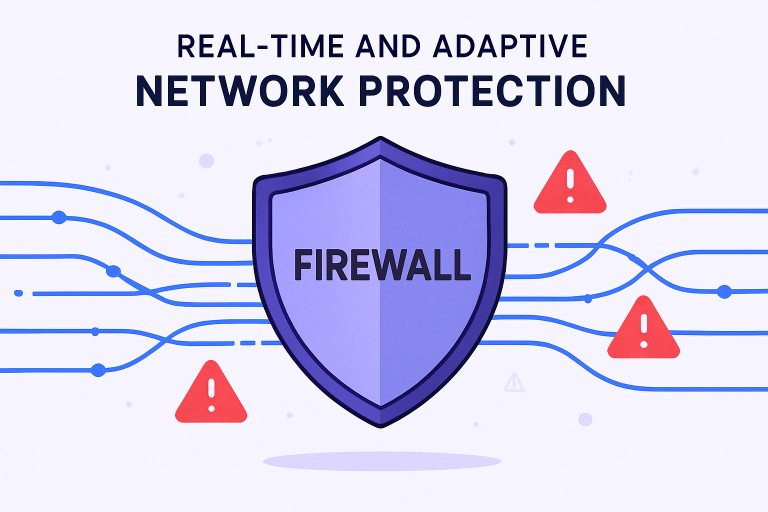
- Real-Time Threat Detection: Adaptive firewalls provide continuous network monitoring, instantly flagging suspicious traffic and activities for immediate scrutiny and response.
- Automated Response Mechanisms: Upon identifying an attack, these systems can autonomously update security rules and restrict hazardous activity, minimizing response time and manual workloads for security teams.
- Integration with Threat Intelligence: By accessing updated threat intelligence from global sources, adaptive firewalls keep their detection algorithms current and relevant, strengthening defenses against emerging attacks.
- Scalability: These solutions are engineered to support organizations as they grow, enabling consistent protection across diverse and expanding network architectures.
Benefits of Implementing Adaptive Firewalls
- Enhanced Security Posture: Organizations benefit from timely, proactive interventions, which significantly lower the risk of data breaches or advanced persistent threats.
- Operational Efficiency: Automated processes reduce human error and free up IT staff for higher-level strategic tasks, optimizing the use of internal resources.
- Compliance Assurance: Comprehensive security monitoring and automated record-keeping help organizations ensure compliance with complex regulatory standards, such as GDPR or HIPAA.
- Cost Savings: Fewer breaches and system outages translate into direct financial savings, as organizations can avoid the high costs associated with remediation and downtime.
Challenges in Deploying Adaptive Firewalls
- Complexity: Deploying adaptive firewalls into established networks often requires in-depth planning, integration expertise, and ongoing management.
- Resource Intensiveness: Machine learning and continuous analysis require considerable computational and storage capacity, potentially increasing infrastructure demands.
- False Positives: Sophisticated detection systems sometimes misidentify legitimate traffic as a threat, which can disrupt normal operations and frustrate end-users.
Case Studies: Successful Implementations
Numerous organizations have experienced substantial benefits from implementing adaptive firewall technology, which dynamically responds to emerging threats in real time. One prominent strategy involves autonomous defense frameworks that integrate honeypots and telemetry to continuously gather threat intelligence and automatically adjust firewall rules across the network. This automation significantly reduces manual administrative tasks while ensuring faster and more precise threat detection and mitigation, thereby minimizing potential damage. By leveraging these adaptive systems, IT teams can maintain robust security with less effort and greater confidence. For those interested in the technical design, deployment, and performance evaluation of such solutions in practical environments, the detailed study available on arXiv offers a comprehensive analysis of how these mechanisms operate and succeed in real-world applications.
Future Trends in Adaptive Firewall Technology
The increasing integration of artificial intelligence into cybersecurity is poised to revolutionize adaptive firewall technology, enabling faster and more accurate threat detection, as well as automated incident response. Future adaptive firewalls will utilize advanced algorithms and machine learning to anticipate and respond to evolving cyber threats in real-time, thereby reducing the reliance on manual intervention. As organizations adopt hybrid and multi-cloud infrastructures, these firewalls will play a crucial role in ensuring consistent protection across diverse digital assets. Moreover, adaptive firewalls are becoming central to zero-trust network models, automatically authenticating and authorizing all communications to eliminate blind spots. According to TechRepublic, zero-trust frameworks are vital for proactively identifying abnormal activity, safeguarding networks, and maintaining robust security across both internal and external environments.
Conclusion
Adaptive firewall solutions mark a significant advancement in safeguarding enterprises against an increasingly complex and evolving cyber threat landscape. Unlike traditional static defenses, these intelligent systems continuously analyze network traffic, detect anomalies, and respond to emerging threats in real time, offering a dynamic and proactive layer of protection for critical organizational assets. By learning from past attacks and automatically adjusting policies, adaptive firewalls reduce exposure to both known and unknown vulnerabilities. Implementing such solutions today enables enterprises to handle future cybersecurity challenges more effectively, strengthens overall risk management, and lays a foundation for long-term digital resilience, ensuring business continuity and the protection of sensitive data in an ever-evolving environment.
