

Key Takeaways
- Intelligent automation is revolutionizing cleaning and property management by enhancing efficiency and reducing costs.
- Technologies like AI, IoT, and predictive analytics are central to this transformation.
- Implementing these innovations can lead to improved tenant satisfaction and streamlined operations.
Table of Contents
- Introduction
- AI-Powered Automation in Operations
- Predictive Maintenance and Analytics
- Smart Cleaning Technologies
- Touchless Cleaning Systems
- Data-Driven Decision Making
- Challenges and Considerations
- Conclusion
Introduction
The cleaning and property management industry is undergoing significant change, driven by the adoption of intelligent automation. Today, technologies like artificial intelligence (AI), the Internet of Things (IoT), and predictive analytics are enabling property managers to operate more efficiently and achieve cost savings. The ability to automate essential cleaning operations, routine property checks, and even maintenance scheduling has streamlined operations and improved hygiene standards and occupant satisfaction. For rental platforms and short-term stays, such as those managed through Airbnb Cleaning Services, these advances mean property owners can more effectively maintain their properties between guest visits, leading to better reviews and repeat bookings.
By using connected devices and AI-powered systems, property managers are not only reducing manual labor but also gaining real-time insights into a building’s needs. These systems can optimize resource allocation, whether it is for deep cleaning, sanitization, or predicting when repairs may be due. Automation also helps ensure property standards remain consistent, regardless of staff or occupancy changes, a core advantage for multi-property operators and busy rental hosts.
Another important aspect is how data analytics is used to support decision-making in the sector. Regular collection of building and occupancy data, when analyzed efficiently, enables dynamic adjustments to cleaning schedules and maintenance, ultimately reducing waste and downtime. For hotels, office towers, healthcare facilities, and rental properties alike, this adaptability means higher levels of satisfaction for both tenants and property owners.
Industry experts anticipate that as these technologies continue to develop, automation will further bridge the gap between operational efficiency and unmatched cleanliness standards. Growing consumer expectations and the demand for safe environments are making the case for intelligent automation even stronger. According to CNBC, the global cleaning robot market is expected to continue its double-digit growth, driven by these very industry needs and innovations.
AI-Powered Automation in Operations
AI-powered automation is transforming the everyday workload within property management. Platforms now integrate AI for automated scheduling, digital messaging with tenants, and prompt reminders about upcoming tasks. Chatbots, for example, answer straightforward questions from tenants around the clock, ranging from rent queries to maintenance requests. This means fewer manual entries for staff and less downtime. Additionally, innovative AI software can analyze building occupancy and utility usage trends, helping property managers quickly adapt to changing needs while maximizing resource efficiency.
SIntelligentautomation also offers robust tools for record management and rent collections, significantly reducing administrative errors and improving both transparency and compliance with evolving tenant regulations. By automating these routine operations, property managers can devote more time and expertise to resolving complex issues or managing tenant relations, ultimately elevating the quality of service tenants receive.
Predictive Maintenance and Analytics
Predictive maintenance uses AI and IoT sensors to monitor property systems and forecast maintenance needs. These systems gather critical data on factors such as energy usage, HVAC performance, and equipment operational health. Advanced analytics platforms can pinpoint potential problem areas before they develop into costly repairs, minimizing both emergency expenditure and operational disruptions.
For example, a network of IoT-enabled sensors may alert managers when water consumption spikes abnormally, indicating a potential leak before significant damage occurs. Similarly, vibration analysis of elevators or climate-control systems can signal hidden mechanical issues, enabling targeted servicing. According to FacilitiesNet, buildings implementing predictive maintenance have reported up to 50 percent reduction in emergency repair costs and significant declines in tenant complaints related to facility malfunctions.
Smart Cleaning Technologies
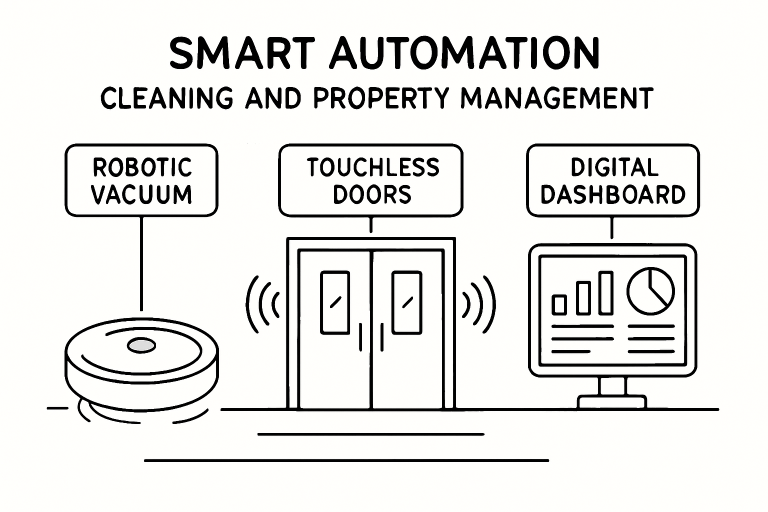
The integration of innovative technologies into cleaning has driven innovations such as robotic vacuums, UV-C light sanitizers, and occupancy-based cleaning schedules. Robotic cleaning devices use AI for smart navigation, adapting to various flooring types and room layouts to deliver thorough, consistent cleaning. Air quality sensors embedded throughout a building automate alerts for air filtration or purification needs, ensuring safer indoor environments for occupants.
Innovative cleaning solutions can be tailored using occupancy sensors, meaning high-traffic areas receive more frequent cleaning while conserving resources in less-used spaces. This not only ensures cleanliness but also enhances building sustainability, as cleaning agents and energy are used more efficiently, resulting in less waste. These data-driven tools play a significant role in protecting occupant privacy while optimizing labor deployment for property managers.
Touchless Cleaning Systems
Touchless cleaning systems are transforming how hygiene is managed within shared spaces. Automated soap dispensers, hands-free entry systems, motion-activated waste bins, and self-cleaning restroom surfaces dramatically decrease contact points, minimizing the risk of cross-contamination and the spread of pathogens. With heightened awareness around public health, these technologies are increasingly becoming standard features in commercial properties and short-term rentals.
Businesses that implement touchless cleaning and management systems report reductions in both illness transmission and the labor required to clean high-touch surfaces. This not only reduces overall cleaning costs but also improves tenants’ and guests’ perceptions of safety and modernity. Touchless solutions are especially valued in high-traffic environments where maintaining rigorous hygiene standards is non-negotiable.
Data-Driven Decision Making
Comprehensive property management is now firmly rooted in data-driven approaches. IoT-connected devices accurately log occupancy patterns, energy consumption, and maintenance cycles, allowing managers to identify inefficiencies and quickly adapt operations. Automated alerts generated from data analysis notify teams when systems approach maintenance thresholds or when usage habits change, enabling proactive responses that avert costly breakdowns or complaints.
Such transparency in operational data also helps property managers justify expenses, set priorities, and strategically schedule maintenance or deep cleaning tasks. Consistent data monitoring keeps buildings running at optimal levels and supports long-term sustainability goals, meeting both regulatory demands and tenant expectations.
Challenges and Considerations
Integrating intelligent automation into cleaning and property management is not without its challenges. The upfront cost for implementing IoT and AI systems can be significant, especially for smaller operators. Teams must also adapt to new platforms and protocols, which can require extensive training. In addition, the proliferation of data-collecting devices heightens the focus on cybersecurity and regulatory compliance. Property managers must stay informed about privacy laws and ensure that all tenant information is adequately protected, balancing innovation with responsibility.
Moreover, as technology evolves, ongoing investment in both infrastructure and staff education is needed to maintain competitiveness. Property managers who navigate these hurdles stand to benefit from streamlined processes, lower long-term costs, and improved tenant retention.
Conclusion
Intelligent automation is reshaping cleaning and property management by providing essential solutions for day-to-day and long-term operational needs. From AI-driven scheduling and predictive maintenance to touchless sanitization and data-driven insights, property managers have access to powerful tools for maximizing efficiency and satisfaction. By embracing these technologies while addressing investment, training, and privacy challenges, the industry can achieve lasting improvements and deliver superior tenant experiences.
