

Key Takeaways
- Prioritize safety and seek immediate medical attention after a semi-truck accident.
- Carefully document the scene and keep detailed records for your insurance claim.
- Communicate cautiously with both your insurer and the other party’s insurance company.
- Consider legal assistance to maximize your compensation and protect your rights.
- Be aware of deadlines and the steps necessary to pursue your claim successfully.
Table of Contents
- Immediate Steps Post-Accident
- Notifying Your Insurance Company
- Interacting with the Other Party’s Insurance
- Understanding Settlement Offers
- Maintaining Detailed Records
- Seeking Legal Assistance
- Being Aware of Time Limits
- Protecting Your Rights
Immediate Steps Post-Accident
The chaotic aftermath of a semi-truck accident requires swift and clear-headed action. Your highest priority should always be personal safety—move to a safe location if possible and attend to any injuries that require urgent care. Even minor injuries can worsen without prompt medical attention, and seeking medical help serves as vital documentation for insurance and legal purposes. If you were injured by a semi in Des Moines, this step is especially important for your health and any potential claim.
Gathering evidence is the next crucial task. Use your phone to take photos of the accident scene, vehicle damage, road conditions, visible injuries, and any surrounding traffic signs or skid marks. If witnesses are present, request their contact information and statements, as these can significantly enhance the strength of your insurance claim and aid in reconstructing how the accident occurred.
Notifying Your Insurance Company
Once the immediate chaos subsides, please get in touch with your insurance provider as soon as possible. Timely notification is required by most policies and will open your claim file. Offer only a factual account of what happened—avoid speculating, admitting fault, or providing opinions. Your insurer needs the basics: the date, time, and location of the crash, details of the vehicles involved, and the names of any parties and witnesses.
Dealing with insurance companies can be overwhelming, so stay organized from the start. Keep a record of whom you spoke with, the date and time of each conversation, and what was discussed. This log can protect your interests if disputes arise during the claim process.
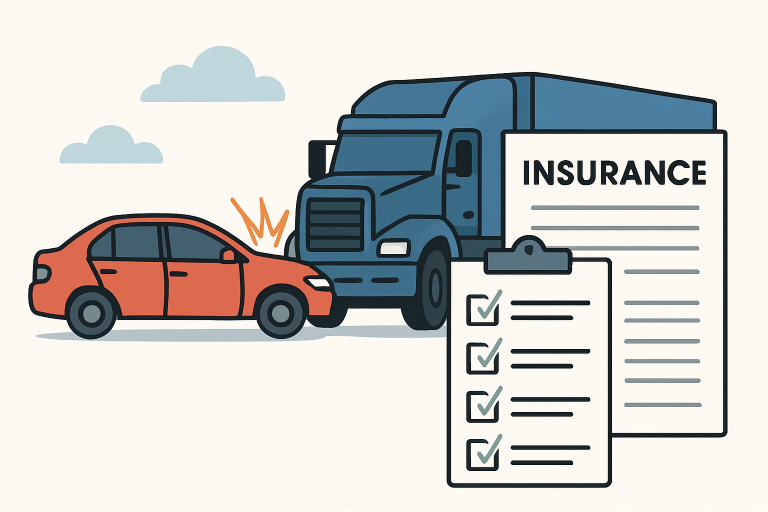
Interacting with the Other Party’s Insurance
- Exercise Caution: The other party’s insurance adjuster may contact you soon after the accident. Their goal is often to protect their own company’s financial interests, sometimes at the expense of your deserved compensation. Do not make off-the-cuff comments, guesses, or admissions.
- Avoid Recorded Statements: You are not legally required to provide a recorded or written statement to your insurer. Politely decline until you have spoken to a knowledgeable attorney. Even seemingly innocent remarks can be used to dispute your version of events or downplay your injuries.
Understanding Settlement Offers
It’s common for insurance companies to present a settlement offer not long after the crash. These initial offers rarely reflect the full extent of your losses. Before signing, make sure you fully account for all consequences of the accident, including emergency care, ongoing treatments, physical therapy, loss of income, future medical needs, property damage, and even emotional hardship.
Remember: accepting a low settlement may bar you from seeking further compensation, even if new symptoms develop later.
Maintaining Detailed Records
Thorough documentation is crucial to supporting your claim and ensuring you receive proper compensation. Maintain an organized file with copies of all doctors’ reports, prescriptions, diagnostic test results, repair estimates, and insurance correspondence. This evidence can substantiate both your immediate expenses and forecast future costs that should factor into any settlement or court award.
Seeking Legal Assistance
Navigating trucking insurance claims requires specialized knowledge. An attorney can step in to manage communications, push for fair negotiation, and, if needed, bring your case to trial. Lawyers specializing in truck accidents have experience countering common insurance strategies designed to minimize payouts. Their involvement helps balance the scales, especially when powerful corporate insurance teams are involved.
Being Aware of Time Limits
Every state imposes a statute of limitations for personal injury claims—any delay could forfeit your right to seek compensation. Consulting an attorney immediately can help ensure that deadlines for submitting claims and lawsuits are met, thereby preserving your legal options.
Protecting Your Rights
Understanding the claims process and your own rights lets you steer clear of tactics that insurance companies sometimes use to weaken your case. Stay alert, ask questions, and reach out for legal support if you feel pressured or uncertain. Staying well-informed and proactive protects not only your recovery but also your financial future.
