

Key Takeaways
- Measure your TV and the dimensions of your room for a perfect fit.
- Choose the right material and style to match existing decor.
- Evaluate storage and cable management solutions.
- Ensure proper viewing height for comfort.
- Prioritize safety, especially with children or pets in the home.
Table of Contents
- Introduction
- Measure Your TV and Room Dimensions
- Choose the Right Material and Style
- Evaluate Storage Needs and Cable Management
- Determine the Appropriate Height
- Prioritize Safety Features
- Consider Room Layout and Viewing Distance
- Budget and Assembly Considerations
- Final Thoughts
Choosing the right TV stand is essential to enhancing both the functionality and style of your living area. A well-chosen TV stand not only keeps your television secure but also complements your décor and offers practical storage. Whether you’re searching for a simple design or something more elaborate, there are numerous options available, including popular choices like Samsung TV stands. The right TV stand can elevate your entertainment experience and tie your room’s aesthetic together seamlessly.
As you begin your search, consider your home’s unique layout and your own viewing habits. Not only does your TV stand need to support your television, but it should also harmonize with the rest of your furniture, provide easy access to accessories, and protect your equipment. Every living space has different needs, so it’s important to carefully weigh the functional and design aspects that are most relevant to you.
Measure Your TV and Room Dimensions
Accurately measuring your television and the space in your room is a vital first step. TVs are labeled by their diagonal measurement, but the actual width and depth can vary significantly depending on bezels and design. For stability and safety, select a stand that is wider than your TV. Typically, a 55-inch TV is about 48 inches wide, so a 60-inch stand is ideal. Also, consider the depth of your chosen stand, especially in spaces with limited room for walking or seating nearby.
Assess the space between your seating and the TV location. Make sure there’s ample room for viewers to move comfortably and see the screen from multiple spots. This is particularly important in open concept spaces or rooms with irregular layouts, where foot traffic may pass near the TV.
Choose the Right Material and Style
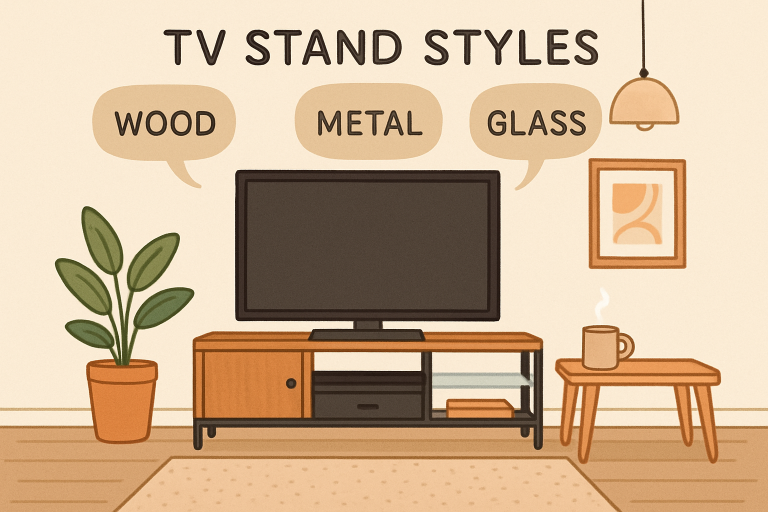
The material of your TV stand sets the tone for your entertainment space. Wooden TV stands add warmth and work well in classic or farmhouse settings, while metal and glass are popular for more contemporary or minimalist designs. When choosing a material, consider both durability and the maintenance you’re willing to undertake. Metal and wood are sturdy and long-lasting, while glass offers a sleek aesthetic but shows fingerprints and requires regular cleaning.
- Wood: Great for traditional and rustic interiors, highly durable, and available in various stains and finishes.
- Metal: Ideal for urban and modern spaces; generally lightweight and easy to maintain.
- Glass: Makes a smaller room feel more spacious, but best for adult-only homes or low-traffic areas due to its fragility.
Another aspect to keep in mind is color coordination. Neutral colors are the most versatile, but a bold color or unique design can serve as a focal point in your room.
Evaluate Storage Needs and Cable Management
Your TV stand can offer valuable storage. Consider what you’ll need to keep nearby: gaming consoles, streaming devices, soundbars, DVDs, or board games. Stands often include shelves, drawers, or cabinets to secure and hide your equipment. Cable management systems are especially important for organizing cords and minimizing clutter, creating a cleaner look and a safer environment. Open shelving works for those who like quick access, while closed cabinets are ideal for hiding items away.
Determine the Appropriate Height
The height of your TV stand determines comfort. Ideally, the center of your TV screen should be at eye level when seated. This prevents neck strain and provides optimal viewing. To achieve this, measure the distance from the floor to your seating eye level, and select a TV stand that positions the screen at that height. Adjustable stands can also help fine-tune the height for different seating arrangements. The right height enhances both comfort and engagement during movie nights or everyday TV time.
Prioritize Safety Features
Households with small children or pets must prioritize safety. Choose stands with sturdy construction and wide bases to prevent tipping. Some models include anti-tip straps or wall anchors. Also, opt for stands with rounded corners to reduce the risk of injury from accidental bumps. Make sure the stand can support the TV’s weight and any additional electronics, and check the manufacturer’s specifications for load capacity.
Consider Room Layout and Viewing Distance
Your TV stand’s position impacts your overall viewing experience. Avoid placing the screen where sunlight can cause glare, such as directly in front of windows. The recommended viewing distance is roughly 1.5 times the diagonal measurement of your TV. For example, sit about 7.5 feet away from a 55-inch TV. Arrange seating to provide clear views for everyone, and consider swivel stands or wall mounts in larger or oddly shaped rooms.
Budget and Assembly Considerations
TV stands cater to a range of budgets, from wallet-friendly particle board units to designer options crafted from premium hardwoods. Decide how much to invest, balancing longevity with your current needs. Factor in potential assembly, as some options require extensive setup while others arrive pre-assembled. If you’re not comfortable with tools or complex instructions, look for simpler designs or inquire about white glove delivery services offered by some retailers.
Final Thoughts
Selecting the right TV stand requires balancing function, style, and safety. Careful consideration of your TV size, storage needs, materials, and room layout can help you find a solution that enhances both your viewing experience and the look of your living space. Quality and durability should always be a priority for a lasting addition to your home entertainment setup.
