

Key Takeaways
- Pre-employment drug screening helps identify candidates who may pose safety risks due to substance use.
- Regular and random drug testing can detect post-hire substance use, addressing ongoing safety concerns.
- Employers must balance drug testing policies with evolving legal landscapes and employee rights.
Table of Contents
- Importance of Pre-Employment Drug Screening
- Rising Concerns with Post-Hire Drug Use
- Legal Challenges and Changing Legislation
- Modern Approaches to Drug Testing
- Balancing Safety and Employee Rights
- Conclusion
Ensuring workplace safety is a top concern for employers and organizational leaders in every industry. Companies recognize that a safe, healthy workforce is critical for productivity, morale, and reputation. One powerful strategy to help guarantee this standard is pre-employment drug screening. By implementing compliant employee drug testing for employers, businesses can take proactive steps to address substance abuse risks before an individual is onboarded. This effort can help reduce accidents, absenteeism, and the likelihood of costly workplace incidents tied to impairment.
In addition to protecting employees and company assets, drug screening programs demonstrate a clear commitment to clients and stakeholders by prioritizing safety. Many industries, such as transportation, manufacturing, and healthcare, count on these measures not only for compliance but also to minimize liability and boost public confidence in their operations. The importance of drug screening is rising as workplaces become increasingly complex and safety-focused.
Importance of Pre-Employment Drug Screening
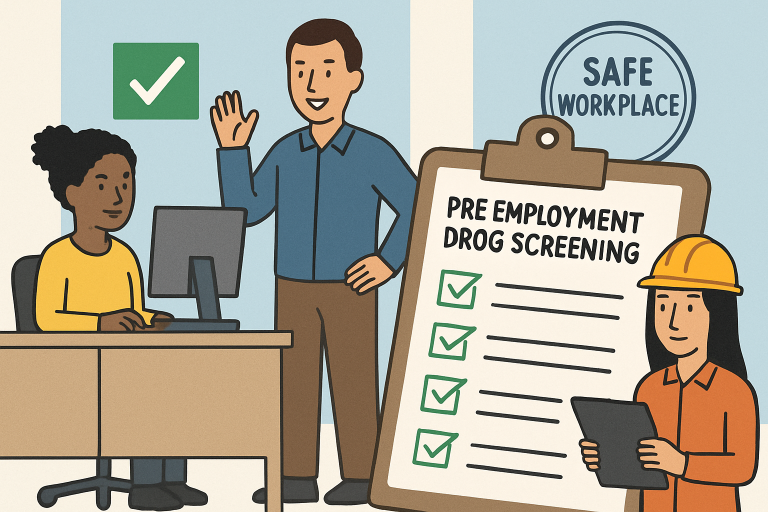
Pre-employment drug screening forms the foundation of an effective workforce risk management plan. Screening job candidates for substance use helps organizations identify individuals who may be at greater risk for workplace accidents, errors, or unreliability due to drug and alcohol abuse. According to the National Drug-Free Workplace Alliance, employees who use drugs are 3.6 times more likely to be involved in workplace accidents and five times as likely to file workers’ compensation claims. The Occupational Safety and Health Administration (OSHA) has highlighted the connection between substance use and workplace injuries, emphasizing the necessity for employers to adopt preventative measures.
These screenings are even more crucial in safety-sensitive sectors, including construction, public transportation, healthcare, and logistics. In these fields, an employee’s impairment could endanger not just themselves but also their coworkers, clients, and the community at large. Further, establishing clear drug-free policies helps deter substance abuse by making expectations and consequences transparent during the hiring process.
Rising Concerns with Post-Hire Drug Use
While pre-employment drug testing is an excellent first step, it cannot account for changes in an employee’s behavior after they join the team. Substance use or abuse can develop mainly during the course of employment. Recent findings from the 2025 Quest Diagnostics Drug Testing Index reveal a significant increase in fentanyl positivity rates in random drug tests, more than seven times higher than in pre-employment screenings. This trend underlines the importance of regular or random drug tests even after hiring, as ongoing monitoring can help detect issues before they escalate into safety incidents.
Companies not only protect their workforce but can also reduce operational disruptions, insurance costs, and long-term liability by maintaining a routine drug monitoring program. Addressing substance use proactively is vital as new synthetic drugs and prescription medication misuse continue to rise in today’s workplaces. The Centers for Disease Control and Prevention (CDC) also stresses the need for employers to stay vigilant regarding opioid use and its potential to impair workplace performance.
Legal Challenges and Changing Legislation
Employers today operate in a legal environment that is constantly shifting, especially due to changes in marijuana laws across states. For example, as of January 1, 2024, Washington state adopted a law that prevents most employers from denying job applicants solely based on a positive pre-employment cannabis test. This evolving landscape means companies must not only update their policies to remain compliant but also make sure all testing criteria are defensible, fair, and aligned with current laws.
Legal considerations impact all aspects of practical workplace drug testing, from privacy concerns to potential discrimination claims. Employers must remain well-informed about both federal guidelines and state-level regulations, which can differ significantly. The recent expansion of cannabis legalization has prompted many businesses to pivot their policies to focus on current impairment rather than the mere presence of a substance in the body.
Modern Approaches to Drug Testing
Thanks to recent technological advancements, modern drug testing is evolving beyond traditional urine or saliva screens. New impairment-detection technologies have emerged that assess real-time physical or cognitive function, enabling employers to determine whether someone is actively impaired on the job. These tests do not focus solely on detecting metabolites or traces of a substance, but rather on assessing physical tasks, attention span, reaction time, and coordination.
By including these real-time assessments, employers gain a more accurate picture of workplace safety. This approach is particularly effective for testing impairment due to reasons beyond illegal drugs, such as prescription medication misuse or fatigue, offering a broader and more nuanced approach to risk mitigation. As described by the Forbes Human Resources Council, these emerging methods help companies adapt to the evolving landscape while remaining focused on performance and safety.
Balancing Safety and Employee Rights
Maintaining the balance between workplace safety and employee rights remains a complex challenge. The shift toward remote work, coupled with the legalization of cannabis in more jurisdictions, has led to a gradual decline in workplace testing. However, the impetus for drug-free policies has not diminished, especially in sectors where safety cannot be compromised. Human resources professionals must establish clear and transparent procedures, prioritize privacy, and provide avenues for appeals and retesting when warranted.
These balanced programs should be paired with education initiatives that inform employees about boundaries and expectations, while also extending support to those in need of rehabilitation. Forward-thinking organizations recognize that a compassionate, flexible approach can improve morale and retention, all while upholding a robust safety culture.
Conclusion
Pre-employment drug screening is a vital part of workplace safety and risk management. However, real safety requires a comprehensive approach that includes ongoing assessments, adaptation to legal standards, and the use of modern, fair testing technologies. Employers must remain alert to evolving norms and equip themselves with the tools necessary for fair, consistent application. Ultimately, an informed, responsible approach to drug testing leads to safer, more secure, and more productive workplaces for everyone.

