

Key Takeaways
- Early exposure to advanced math enhances cognitive, academic, and social development.
- Specialized curriculum and trained educators are critical for effective early math instruction.
- Parental involvement and equitable access ensure all children benefit from advanced opportunities.
Table of Contents
- Introduction
- The Importance of Early Math Education
- Benefits of Advanced Math Programs
- Implementing Advanced Math in Early Education
- Challenges and Considerations
- Conclusion
Introduction
Early childhood education shapes how children see the world and approach learning for the rest of their lives. Integrating advanced math programs for kindergarten builds a robust foundation for cognitive growth, critical thinking, and confidence with numbers. By challenging young minds with engaging mathematical concepts, educators lay the groundwork for intellectual curiosity and academic resilience that extends well beyond the math classroom.
This early integration is not simply about rote memorization or pushing children ahead prematurely, but about nurturing an environment that encourages exploration and discovery. When tailored to developmental stages, advanced math instruction can unlock creative problem-solving and prepare students for the interconnected challenges of the modern world.
The Importance of Early Math Education
Research continues to underscore the long-term value of mathematical fluency gained in early childhood. Early numeracy skills are among the strongest predictors of later academic achievement, even stronger than early literacy. According to the American Psychological Association, studies show that simple practices like finger counting can significantly enhance children’s understanding of numbers and improve higher-level math skills. As children develop a comfortable relationship with numbers, patterns, and logic, they acquire the foundational tools to succeed across subject areas and adapt to increasingly complex tasks as they grow.
Broader Impacts
Those who master advanced math concepts early exhibit better executive functioning and are more likely to participate in higher-level math and science courses later on. Early math learning supports language acquisition, promotes scientific inquiry, and builds social-emotional skills such as perseverance and collaboration.
Benefits of Advanced Math Programs
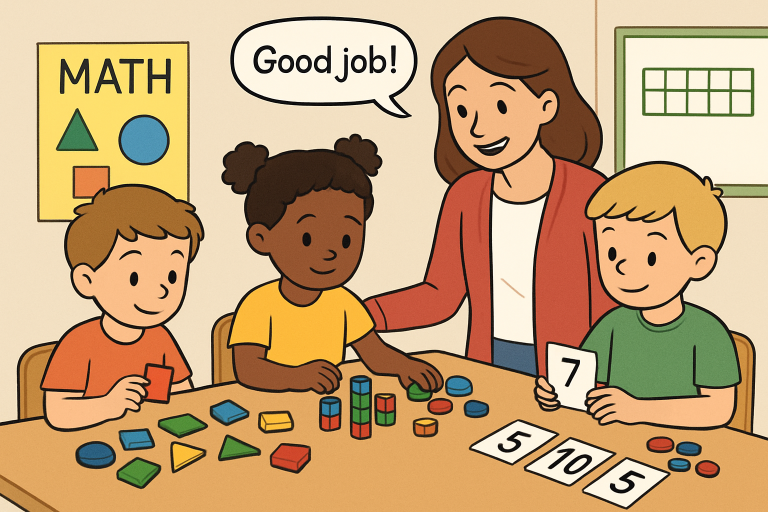
- Enhanced Cognitive Skills: Engaging young learners with advanced mathematical ideas fosters neural connections involved in memory, logic, and reasoning. Students who regularly practice visualizing and manipulating numbers tend to have stronger overall cognitive agility. Children who excel in early math often enjoy broader academic success across disciplines.
- Improved Academic Performance: The logical thinking and attention to detail developed through early math education have a ripple effect on reading comprehension, science, and even the arts. Students who develop a growth mindset in math are more resilient and better equipped for challenges in any subject.
- Preparation for STEM Careers: Nurturing an early interest in complex math not only prepares children for advanced courses in high school and college, but it also ignites curiosity in STEM pathways. Early exposure builds confidence, making the prospect of a career in science, technology, engineering, or mathematics both accessible and appealing.
Implementing Advanced Math in Early Education
To unlock the benefits of advanced math programs for young learners, schools and educators must focus on thoughtful and deliberate implementation. Here’s what works best:
- Curriculum Development: An effective early math curriculum introduces sophisticated concepts—such as number sense, spatial relationships, and logical reasoning—in age-appropriate, playful ways. Lesson plans should include puzzles, hands-on learning, and open-ended problems that invite exploration and creativity.
- Teacher Training: Professional development is essential for teachers to deliver complex concepts in relatable ways for young minds. Ongoing training should focus on effective questioning, differentiated instruction, and culturally responsive techniques that meet the needs of diverse learners.
- Parental Involvement: Engaging families ensures math learning continues beyond the classroom. Schools can support parents with take-home activities and guidance on turning everyday moments—like cooking and shopping—into math lessons that reinforce curiosity and skill development.
Challenges and Considerations
Despite these successes, several challenges persist. One major hurdle is ensuring equitable access for all students, regardless of background or school resources. Disparities in funding, teacher experience, and family support can limit the reach and effectiveness of advanced math opportunities. Programs must prioritize accessibility, including support for English language learners and students with diverse learning needs.
Another consideration is balancing rigor with readiness. While many young children are capable of advanced thinking, instruction must be carefully differentiated. Continuous assessment and flexible grouping enable teachers to adjust to individual progress, ensuring that all students are appropriately supported and stretched.
Conclusion
Early introduction to advanced math programs offers a powerful pathway to unlocking each child’s potential. Through a combination of thoughtfully designed curricula, skilled educators, active parental involvement, and a focus on equity, it is possible to foster both academic achievement and a lifelong love for learning. By championing math success in the earliest years, we set the stage for future innovation, problem-solving, and resilience in children—attributes that will equip them not just for school, but for life itself.
