

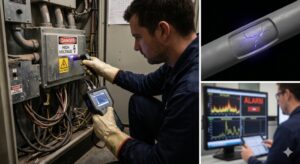
Electrical systems rarely fail without warning. The problem is, those warnings are often invisible. Unlike mechanical issues that produce noise, vibration, or obvious wear, electrical faults tend to develop quietly behind the scenes until they reach a critical point.
By the time something goes wrong, it can feel sudden and unpredictable. In reality, most major electrical failures are the result of small, undetected issues building up over time.
That’s why early detection methods, including techniques like Partial Discharge Testing, are becoming increasingly important for identifying faults before they escalate into serious problems.
Why Electrical Issues Are Often Missed
They don’t show obvious symptoms
Many electrical problems develop inside insulation, wiring, or equipment where they can’t be seen easily.
Unlike physical damage, there’s often:
- No visible wear
- No immediate performance drop
- No clear warning signs
This makes it easy to assume everything is working as it should.
Systems continue operating until failure
Electrical components can keep functioning even while faults are developing. This creates a false sense of security.
By the time a failure occurs, the underlying issue has usually been present for some time.
Common Hidden Electrical Problems
Insulation breakdown
Insulation is designed to keep electrical currents contained and controlled. Over time, it can degrade due to heat, moisture, or ageing.
This can lead to:
- Small internal discharges
- Reduced efficiency
- Increased risk of failure
Loose connections
Connections can loosen over time due to vibration, temperature changes, or general wear.
This may cause:
- Intermittent faults
- Heat build-up at connection points
- Increased resistance
Left unchecked, this can result in equipment damage or fire hazards.
Moisture intrusion
Water and electricity don’t mix, but moisture can find its way into systems through small gaps or environmental exposure.
This can lead to:
- Corrosion
- Short circuits
- Reduced insulation effectiveness
Overloading and stress
Electrical systems designed for a certain load can become strained when demand increases.
This can result in:
- Overheating
- Accelerated wear
- Reduced lifespan of components
The Risk of Ignoring Small Issues
Minor faults can escalate quickly
What starts as a small irregularity can develop into a major failure if left unaddressed.
For example:
- A minor insulation fault can lead to complete breakdown
- A loose connection can cause significant heat damage
- A small moisture issue can spread through the system
Downtime and repair costs increase
Unexpected failures often result in:
- Unplanned downtime
- Expensive emergency repairs
- Disruption to operations
Addressing issues early is usually far more cost-effective than dealing with a full failure.
How Early Detection Makes a Difference
Identifying problems before they escalate
Modern diagnostic techniques allow issues to be detected at an early stage, often before they affect performance.
This provides:
- More time to plan repairs
- Reduced risk of sudden failure
- Better overall system reliability
Preventative maintenance becomes more effective
Instead of reacting to problems, businesses can take a proactive approach.
This includes:
- Regular inspections
- Monitoring system performance
- Addressing small issues before they grow
Signs You Shouldn’t Ignore
Subtle indicators of trouble
Even though many electrical issues are hidden, there are sometimes small signs that something isn’t right.
These can include:
- Unusual heat in equipment
- Flickering or inconsistent performance
- Unexpected shutdowns or resets
Changes in performance
If a system starts behaving differently, even slightly, it’s worth investigating.
Small changes often point to underlying issues that haven’t fully developed yet.
Building a More Reliable System
Regular checks matter
Routine inspections help identify risks early and maintain system performance.
This doesn’t have to be complex, but it should be consistent.
Use the right tools and expertise
Not all issues can be detected through visual checks alone. Advanced diagnostic tools and experienced professionals play a key role in identifying hidden problems.
Investing in proper assessment methods can prevent much larger issues down the line.
Taking a Proactive Approach
Electrical failures rarely happen without cause. They are usually the result of small problems that weren’t addressed early enough.
By focusing on early detection, regular maintenance, and understanding how these issues develop, you can significantly reduce the risk of major failures.
It’s not about expecting problems, it’s about recognising that they can develop quietly and taking steps to catch them before they turn into something much bigger.

