

Key Takeaways
- A Ponte Vedra Beach home should support everyday routines as well as beach days.
- Flood exposure, wind protection, elevation, insurance, and maintenance deserve attention before an offer is written.
- A home near the ocean can offer a different balance of access, space, privacy, and ownership costs than a direct beachfront property.
- Road access, parks, shopping, schools, medical services, and seasonal traffic can shape the long-term ownership experience.
- Comparing the complete annual cost of each option can help prevent surprises after closing.
Buying along Florida’s First Coast can be exciting, especially for people drawn to ocean air, outdoor living, golf, and quick access to the shoreline. Still, a smart coastal search goes beyond views and distance to the sand. Buyers considering Ponte Vedra Beach, FL homes for sale can use Suzie & Rory Connolly’s local property-search page to review available homes and explore neighborhood options. Their Ponte Vedra Beach-focused listing resources and guides for nearby Palm Valley, Jacksonville Beach, Neptune Beach, Atlantic Beach, and Nocatee make them a useful source for comparing lifestyle, home styles, and locations across the area.
The right property is one that remains practical after the novelty of move-in day fades. That means evaluating how the home functions during a normal workweek, a busy beach weekend, and periods of heavy rain or severe weather.
Why Coastal Buyers Need a Wider Checklist
Two homes can be only a few miles apart yet offer very different ownership experiences. One may sit close to beach access but have limited parking, more visitor traffic, and greater exposure to salt air. Another may be farther inland, with more storage and easier daily access, while still keeping the coast within a short drive. The listing price is only one part of the decision. Insurance, repairs, association costs, access roads, and the condition of major systems also belong in the comparison.
Step 1: Define the Lifestyle Before Viewing Homes
Start by describing how the property will actually be used. A full-time residence, occasional getaway, and rental-oriented property can require very different features. Think about the number of bedrooms, guest space, outdoor areas, parking, garage storage for bikes or beach equipment, and the level of privacy that feels comfortable.
Then list the places you expect to visit regularly. Consider work routes, schools, grocery stores, restaurants, parks, health care, and the beach access points you would realistically use. Living directly on the ocean may be ideal for some buyers, but a home a few minutes away can be a better match for those who value a quieter street, easier parking, or more interior and yard space.
Step 2: Compare Beach Access With Total Value
Look Beyond the Front Row
Organize your search into direct beachfront homes, ocean-view homes, near-beach homes, and inland options. Each category can provide a coastal lifestyle, but the trade-offs differ. Direct beachfront ownership may deliver immediate access and expansive views, while homes farther from the shoreline may provide more flexibility in price, lot size, or privacy.
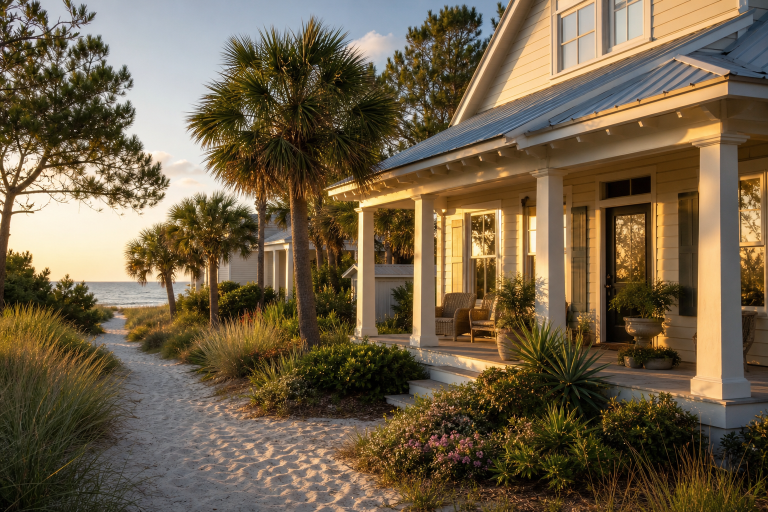
Before dismissing a near-beach location, visit the route to the shoreline. Check the availability of public access, parking, sidewalks, bike paths, and safe crossings.
Step 3: Review Flood and Storm Exposure
Flood and wind risk should be reviewed at both the house and neighborhood levels. Check the property’s FEMA flood-zone designation and local mapping information. Ask the seller about known flooding, water intrusion, wind damage, roof repairs, drainage work, and insurance claims. A seller’s disclosures, inspection findings, permit history, and insurance documentation can provide useful context.
During a showing, pay attention to elevation and the placement of vulnerable equipment. Consider the height of living areas, garage, HVAC components, electrical equipment, and outdoor storage. Look for practical protective features such as impact-rated openings, storm shutters, reinforced exterior doors, sound roof maintenance, gutters, and drainage that directs water away from the structure. Also consider whether the neighborhood’s main roads or bridges could affect access during severe weather.
Step 4: Calculate Insurance and Maintenance Costs
Request insurance estimates before making an offer, not after inspections are complete. Ask carriers or insurance professionals about homeowners coverage, separate flood coverage, wind provisions, hurricane deductibles, roof-related requirements, exclusions, and renewal terms. Standard homeowner’s policies generally do not automatically cover every type of flood damage, so buyers should confirm coverage details for the specific property.
Coastal maintenance also deserves its own budget line. Salt air, moisture, wind-driven rain, and intense sun can affect exterior finishes, metal components, doors, windows, roofing, landscaping, and outdoor equipment. For condos, townhomes, and planned communities, review HOA fees, governing documents, budgets, reserve information, recent meeting minutes, and any planned assessments. Compare the full yearly cost, including taxes, insurance, association fees, utilities, maintenance, and expected repairs.
Step 5: Study Everyday Convenience
Visit promising neighborhoods at different times of day. A peaceful morning can feel very different from a weekend afternoon or a popular event day. Drive the routes to work, school, shops, medical appointments, and beach access. Note parking, road congestion, sidewalks, lighting, bike routes, and the ease of entering or leaving the community.
Walkability can be especially meaningful for buyers who want nearby parks, dining, errands, and recreational space without relying on a car for every trip. Research summarized in a national walkability survey reflects the importance many residents place on access to sidewalks, parks, shops, and daily destinations.
Step 6: Compare Property Types Carefully
- Beachfront homes: Immediate beach access and views, with potentially greater weather exposure and exterior upkeep.
- Ocean-view homes: A coastal setting that may reduce direct shoreline exposure, depending on the location.
- Condos: Shared exterior responsibilities, balanced against HOA rules, fees, insurance arrangements, and reserve planning.
- Townhomes: A middle-ground option with private living space and some shared maintenance considerations.
- Inland homes: Often worth comparing for space, storage, parking, and a different day-to-day traffic pattern.
Questions to Ask Before Making an Offer
- Has the home sustained flood, storm, or water-intrusion damage?
- What insurance coverage is available, and what deductibles apply?
- How old are the roof, windows, HVAC system, electrical panel, and water heater?
- Is the property governed by an HOA or condominium association, and are assessments planned?
- How does the area feel during the busiest beach season?
- Can the property be reached easily from the roads and services you will use most?
Final Decision Checklist
A well-chosen coastal home balances enjoyment with preparation. Before moving forward, confirm that the location supports your routine, insurance estimates are clear, storm and flood exposure have been reviewed, likely maintenance fits the budget, and the home has been compared with alternatives farther from the beach. Complete inspections, review available records, and give yourself time to understand the neighborhood. In Ponte Vedra Beach, a thoughtful process can help turn a beautiful coastal setting into a home that works for years to come.

