

Key Takeaways
- A traditional hybrid can improve fuel economy without requiring home charging.
- A plug-in hybrid can handle many short trips on electricity while retaining gasoline backup for longer drives.
- An all-electric vehicle can be an excellent fit when dependable charging is available at home, work, or nearby.
- Typical daily mileage matters more than maximum advertised range.
- Weather, speed, cargo, terrain, and climate control can affect electric range.
- A one-week review of real driving habits can make the decision much clearer.
Electrified vehicles can make everyday driving more efficient, but the best option is not automatically the newest model or the one with the longest advertised range. The right fit depends on how far you drive, where you park, who rides with you, and how often you take longer trips. Drivers comparing options can Learn More while focusing on the routines that matter most at home, at work, and on the road. A commuter covering 20 miles each weekday may have very different needs than a family that routinely drives several hundred highway miles in a weekend. Looking at your normal week first helps separate practical needs from features that may sound appealing but add little value to daily ownership.
Why Vehicle Fit Matters More Than Trends
There is no one-size-fits-all electrified vehicle. A car that works perfectly for a homeowner with overnight charging may be less convenient for someone who parks on the street or relies on a shared apartment garage. Start with your parking setup, weekly mileage, budget, travel patterns, and comfort level with planning charging stops. It also helps to avoid treating every electrified vehicle as the same thing. Hybrids, plug-in hybrids, and battery-electric vehicles use electricity differently. Once you understand those differences, it becomes easier to narrow the options without getting distracted by labels alone.
The Main Types of Electrified Vehicles
- Hybrid electric vehicle: A hybrid combines a gasoline engine with an electric motor and a small battery. It charges itself through regenerative braking and the engine, so it does not need to be plugged in.
- Plug-in hybrid electric vehicle: A plug-in hybrid has a larger battery that can be charged from an outlet. It can use electricity for shorter trips, then rely on gasoline when the battery charge is depleted or when more range is needed.
- Battery-electric vehicle: An all-electric vehicle uses a rechargeable battery and electric motors rather than a gasoline engine. It must be charged from an external power source.
The key distinction is simple: standard hybrids do not require plugging in, while plug-in hybrids and all-electric vehicles do. That difference should shape the rest of your comparison.
Match the Powertrain to Daily Driving
Before shopping, track one normal week of driving. Include commuting, school drop-offs, errands, appointments, activities, and weekend trips. Record not only total miles, but also when and where the vehicle sits parked for several hours.
Questions to Ask
- How many miles do you drive on a typical weekday?
- How often do you drive more than 200 miles in one day?
- Are most trips urban, suburban, highway-based, or mixed?
- Is another vehicle available for towing, hauling, or long road trips?
- Would you rather refuel in minutes or charge during planned stops?
A hybrid can be a strong choice for drivers who want better fuel economy without changing their current routine. A plug-in hybrid can suit people with short daily trips and occasional long-distance drives. An all-electric vehicle often works best when routine driving fits comfortably within its usable range, and regular charging is easy to access.
Check Your Charging Routine
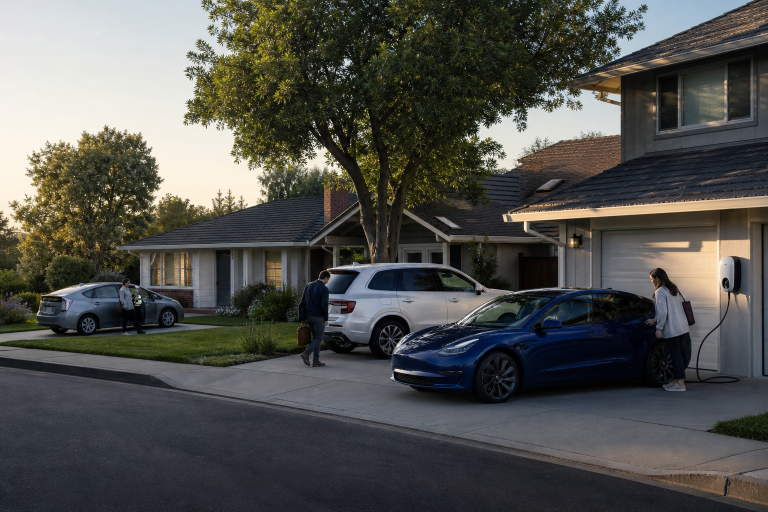
Charging access deserves as much attention as range. Inspect where the vehicle will park overnight. Homeowners may need to confirm that their electrical panel and parking area can support charging equipment, while renters should ask about building rules, assigned parking, and future installation options. The Department of Energy offers guidance for planning your charging routine, including home, workplace, and public charging considerations.
- Level 1 charging: Uses a standard household outlet and can work well for light daily driving or overnight plug-in hybrid charging.
- Level 2 charging: Uses 240-volt equipment and replenishes energy faster, making it useful for many EV owners.
- DC fast charging: Provides rapid public charging for compatible all-electric vehicles, especially during longer trips.
Public charging can be valuable, but it is best viewed as support for a dependable primary routine rather than the only plan. Confirm connector compatibility, charging speeds, nearby locations, and how charging fits into your workday or travel schedule.
Plan for Weather and Road Conditions
The advertised range is measured under controlled conditions so that real-world results may vary. Cold temperatures, cabin heat, high highway speeds, steep grades, strong winds, roof cargo, heavy loads, and towing can all increase energy use. This does not make an EV impractical in colder regions, but it does mean drivers should leave an extra buffer of range for winter travel. Useful habits include preconditioning the cabin while plugged in, checking tire pressure when temperatures change, using built-in route planning for unfamiliar drives, and identifying a backup charging stop on longer routes.
Compare Space, Comfort, and Utility
Powertrain choice should not overshadow basic usability. A highly efficient vehicle still needs to fit passengers, child seats, work gear, pets, groceries, and the equipment that comes with your lifestyle.
Practical Features to Compare
- Rear-seat legroom, entry height, and child-seat access
- Cargo opening size, floor layout, and underfloor storage
- Available all-wheel drive and ground clearance
- Roof-rack and towing capability
- Charging-cable storage and space for travel gear
- Seat comfort, visibility, and road noise on longer drives
A city driver may prioritize easy parking and a compact footprint. A household that carries sports gear or travels with several passengers may be better served by a small SUV with flexible cargo space, even if a sedan has slightly better efficiency.
Look Beyond the Purchase Price
Compare total ownership costs rather than focusing only on the sticker price or monthly payment. Include expected annual miles, electricity and gasoline costs, insurance, tires, routine service, possible home charger installation, and warranty coverage. The EPA explains how drivers can compare local emissions from electric and plug-in hybrid driving, which can add useful context to a broader cost and ownership review. All-electric vehicles generally have fewer engine-related maintenance needs, whereas plug-in hybrids retain a gasoline engine and its associated service requirements. Incentives and energy costs can vary widely by location, so use current local figures when building your budget.
Use a Better Test-Drive Checklist
- Adjust the driver’s seat and check visibility in traffic and while parking.
- Test rear-seat access with the passengers who will use it most.
- Open the cargo area and bring a common item, such as a stroller, work bag, or sports equipment.
- Drive at city and highway speeds to assess ride quality and road noise.
- Try regenerative braking, drive modes, and the vehicle’s energy-use displays.
- Review charging information, route planning, connector type, and warranty details.
A Simple Decision Guide
- Choose a hybrid if: charging access is limited and improved gasoline efficiency is the main goal.
- Choose a plug-in hybrid if: daily trips are relatively short, charging is available, and gasoline flexibility remains important.
- Choose an all-electric vehicle if: home or workplace charging is dependable and most trips fit comfortably within the vehicle’s real-world range.
Conclusion
The best electrified vehicle should make daily travel easier, not add unnecessary complications or costs. A realistic review of mileage, charging access, weather, passenger needs, cargo space, driving conditions, and long-term ownership expenses can quickly reveal which option fits your lifestyle. Consider how often you take short trips, commute long distances, travel with family, or take weekend road trips. Home charging can make an EV more convenient, while a hybrid or plug-in hybrid may offer greater flexibility for drivers with changing travel needs. In 2026, drivers have more electrified choices than ever, but the smartest decision still starts with a simple question: how will this vehicle be used each week?

