

Imagine ordering a box of premium chocolates, only to open it and find a melted mess. Or receiving a delivery of skincare products that have separated because they spent hours sitting in a hot delivery van. These situations are frustrating for customers and costly for businesses.
Shipping temperature-sensitive products involves more than putting items in a box and hoping they arrive safely. Heat, cold and sudden temperature changes can affect everything from food and cosmetics to medicines and electronic components.
The good news is that many shipping problems are preventable. With suitable packaging, careful planning and temperature monitoring devices to track conditions during transit, businesses can reduce the risk of damage and ensure products reach customers in good condition.
Understand What Temperature Your Products Need
Not every temperature-sensitive product needs to be refrigerated. Some products are damaged by excessive heat, while others can become unusable if they freeze.
Chocolate, for example, can melt or develop an unpleasant appearance when exposed to fluctuating temperatures. Certain skincare products may separate, while some medicines require strict storage conditions to remain effective.
Before shipping anything, check the manufacturer’s recommended storage and transport temperatures.
It’s also important to consider how long a product can safely remain outside its recommended range. For products such as medicines, these limits should come from the manufacturer or relevant handling instructions rather than guesswork.
Choose Packaging That Provides Proper Insulation
The right packaging can make a considerable difference to how well products withstand temperature changes.
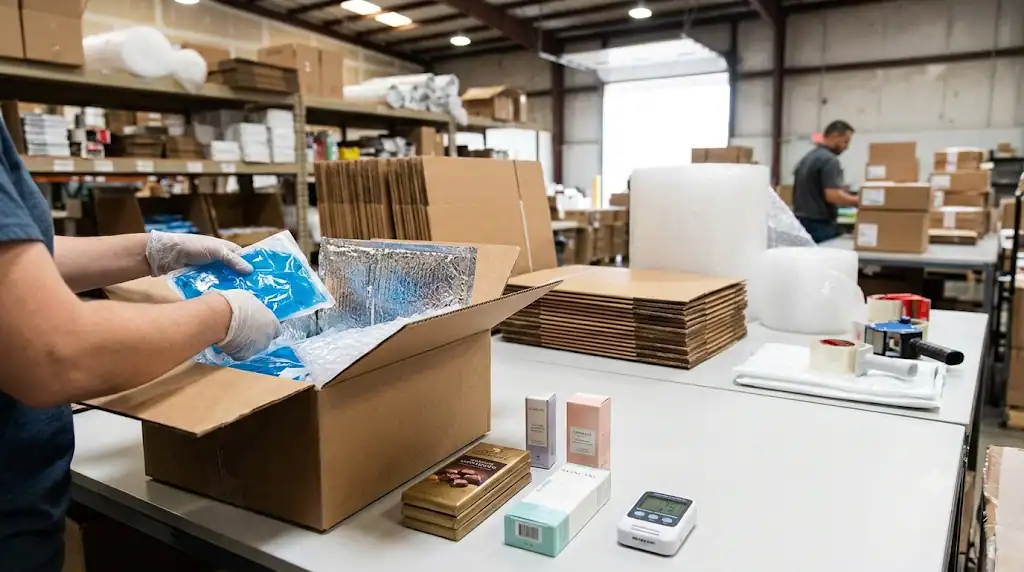
Ordinary cardboard boxes provide little protection against extreme heat or cold. Insulated packaging helps slow temperature changes inside the parcel.
Depending on what you’re shipping, suitable options may include:
- Insulated boxes or liners that reduce heat transfer.
- Gel packs designed to maintain chilled conditions.
- Phase-change materials that help regulate specific temperature ranges.
- Protective cushioning to prevent movement and damage.
- Moisture-resistant packaging to protect products from condensation.
Remember that insulation doesn’t actively cool a product. It simply slows the rate at which its temperature changes.
For longer journeys, additional cooling measures or temperature-controlled transport may be necessary.
Test Your Packaging Before Sending Orders
Packaging that works for a short local delivery might fail during a longer journey.
Instead of assuming your packaging is suitable, test it under realistic shipping conditions.
Pack a sample product exactly as you would for a customer. Include the same insulation, cooling materials and protective layers.
Then assess how well the package maintains the required temperature over the expected delivery period, allowing extra time for possible delays.
For example, if deliveries usually take 24 hours, testing the packaging over 36 or 48 hours may reveal weaknesses that would otherwise go unnoticed.
Testing is particularly valuable before launching a new product or shipping to an area with a different climate.
Plan Deliveries to Reduce Delays
Even excellent packaging has limitations, especially when parcels spend longer in transit than expected.
Where possible, choose delivery services that provide reliable tracking and realistic delivery timeframes.
Avoid dispatching highly sensitive products immediately before weekends or public holidays if they could remain in storage for several days.
It’s also worth considering where parcels might be left. A delivery sitting in direct sunlight for several hours can experience very different conditions from one handed directly to the recipient.
Providing customers with tracking information and delivery notifications can help them arrange prompt collection.
Make Sure Products Are Packed at the Correct Temperature
One easily overlooked mistake is placing warm products inside insulated packaging and expecting them to cool down.
Insulation works in both directions. If an item is packed too warm, the packaging can slow its cooling.
Products should therefore be brought to their required shipping temperature before packing.
Cooling materials should also be prepared according to their instructions. Frozen gel packs, for example, may be unsuitable for products that must never freeze unless they’re properly separated and validated for that use.
Taking a few minutes to check these details can prevent avoidable damage.
Have a Plan for Unexpected Problems
Despite careful preparation, deliveries sometimes go wrong.
A parcel might be delayed, a vehicle could break down, or a customer may be unavailable to accept delivery.
Businesses should establish clear procedures for dealing with these situations, including when products need to be inspected, replaced or discarded.
For safety-critical products, particularly medicines and perishable foods, a suspected temperature breach should be assessed against established product-specific requirements.
Keeping records of shipping conditions and customer complaints can also help identify recurring problems.
Small Changes Can Prevent Expensive Losses
Protecting temperature-sensitive products doesn’t always require complicated equipment or expensive shipping arrangements.
Understanding each product’s requirements, choosing suitable packaging and testing delivery methods can prevent many common problems.
Just as importantly, reviewing shipping failures helps businesses improve their processes rather than repeatedly replacing damaged orders.
When products consistently arrive in the condition customers expect, businesses waste less, spend less on replacements and build greater confidence in their delivery service.

