

Key Takeaways
- Review sunlight, soil, drainage, and traffic patterns before selecting plants.
- Choose plants according to their mature size, moisture needs, and light requirements.
- Keep turf in useful, easy-to-maintain areas rather than treating grass as the default ground cover.
- Use mulch, irrigation adjustments, and grading to reduce weeds, runoff, and unnecessary work.
- Complete improvements in stages, starting with the parts of the yard that affect daily use.
Table Of Contents
- Start With A Site Check
- Choose Plants For The Location
- Plan The Right Amount Of Turf
- Manage Water Before Adding Plants
- Use Mulch And Soil Cover Wisely
- Add Hardscape For Function
- Build A Simple Maintenance Plan
- Avoid Common Florida Landscaping Mistakes
- Follow A Step-By-Step Project Plan
- Final Thoughts
A healthy Florida yard is built around the conditions already present on the property, including heat, heavy rain, sandy or compacted soil, and changing sun patterns. Homeowners may use an initial site review to prepare questions before comparing landscaping services, but the most important first step is understanding what the yard needs to function well.
Low maintenance does not mean filling every open space with the same plant or eliminating all routine care. It means choosing a practical layout, using plants that suit the site, and addressing water issues before they turn into recurring problems.
Start With A Site Check
Walk the yard at different times of day and note where direct sunlight falls, where water remains after a storm, and which areas become dry beside pavement or walls. Look for compacted soil, exposed roots, downspout outlets, worn paths, and water that moves toward the foundation.
A single property can contain several growing environments. For example, the space beneath an established tree may need shade-tolerant plants and careful protection of roots, while a driveway bed may require plants that tolerate reflected heat and long periods of sun.
In Central Florida, a thoughtful site map can also make discussions about landscaping services more productive because it identifies high-use areas, drainage concerns, and priorities before work begins.
Choose Plants For The Location
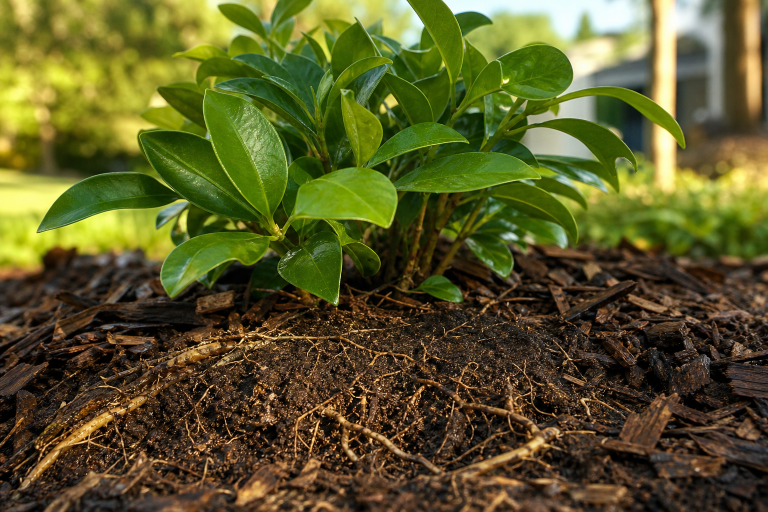
The simplest plant-selection rule is right plant, right place. Match each plant to the available light, soil moisture, wind exposure, and room for future growth. The University of Florida’s guidance for choosing plants by site conditions also recommends checking mature height and width before planting, which helps prevent crowding around windows, walkways, and utilities.
Plant Selection Checklist
- Check whether the location receives full sun, partial shade, or deep shade.
- Choose plants suited to wet, average, or dry soil conditions.
- Leave enough space for the plant’s mature width.
- Group plants with similar watering needs.
- Repeat a few plant types for a more organized appearance.
- Use a mix of trees, shrubs, grasses, and ground covers instead of relying on one plant throughout the yard.
Plan The Right Amount Of Turf
Grass remains useful for play areas, open gathering spaces, and places where a clear walking surface is needed. However, large or awkward lawn areas can add mowing, edging, watering, and pest-monitoring work. Narrow strips between beds and fences are especially difficult to maintain.
Keep turf where it serves a purpose, then convert hard-to-mow corners or deeply shaded spaces into mulched planting beds or suitable ground covers. Use broad, curved bed edges that can be mowed easily, and avoid creating tiny lawn islands that require trimming from every side.
Manage Water Before Adding Plants
Drainage and irrigation should be reviewed before new beds are installed. Water standing near a structure, washing mulch away, or pooling around plant roots may signal a grading, downspout, soil, or irrigation issue that needs attention first.
Check that sprinklers water plants and turf instead of pavement, fences, and driveways. Adjust run times for rainfall and seasonal conditions rather than relying on a fixed schedule. If water collects near the home or erosion is severe, consult a qualified professional before adding soil, plants, or hardscape.
Use Mulch And Soil Cover Wisely
Mulch helps soil retain moisture, limits many weeds, protects roots, and gives beds a finished appearance. Florida-Friendly landscape practices recognize mulch as especially useful in shady spaces and hard-to-mow areas, while also emphasizing the value of reducing stormwater runoff through better yard design.
- Apply mulch in an even layer rather than a high mound.
- Keep it several inches away from tree trunks and plant crowns.
- Refresh thin or scattered mulch as it breaks down.
- Do not use mulch to hide poor drainage or severely compacted soil.
Add Hardscape For Function
Hardscape includes paths, patios, edging, seating pads, and other durable surfaces that support everyday movement. A path placed where people already walk can protect turf and planting beds, while a stable seating area can prevent furniture from sinking into wet ground.
Choose slip-resistant materials and plan the slope carefully so rainfall moves away from structures. Hardscape should simplify the yard’s use and upkeep, not create difficult corners, drainage traps, or unnecessary edges to maintain.
Build A Simple Maintenance Plan
A low-maintenance yard still needs consistent attention. A short monthly check can prevent small issues from becoming expensive replacements or major cleanup projects.
- Inspect irrigation heads, timers, and overspray.
- Remove diseased or damaged plant material promptly.
- Clear leaves from drains, paths, and patios.
- Check mulch depth and repair bed edges as needed.
- Watch for standing water after heavy rain.
- Prune plants when they outgrow their intended space, while preserving their natural form.
Avoid Common Florida Landscaping Mistakes
Planting Too Closely
Crowded plants compete for light and airflow, become harder to inspect, and often require frequent pruning. Spacing for mature size may look sparse at first, but it creates a healthier landscape over time.
Watering On A Fixed Schedule
Rainfall, plant age, soil type, and local watering restrictions should guide irrigation decisions. Excess water can be just as damaging as too little water, particularly in beds that drain slowly.
Ignoring Mature Size And Site Changes
Small plants can eventually block windows, paths, and equipment. Trees also create more shade as they mature, so nearby turf and sun-loving plants may need to be reevaluated later.
Follow A Step-By-Step Project Plan
- Map the property. Mark sun, shade, drainage paths, utilities, and high-traffic areas.
- Set one or two goals. Focus on needs such as less mowing, more privacy, better drainage, or usable outdoor space.
- Correct water problems first. Address runoff, pooling, and uneven irrigation before planting.
- Lay out turf, beds, paths, and gathering areas. Select individual plants after the main structure is clear.
- Install in stages. Begin with the improvements that offer the biggest daily benefit.
- Review after a season. Keep what thrives, move what struggles, and adjust the maintenance routine.
Final Thoughts
A healthy Florida yard begins with observation rather than impulse purchases. When plant choices, turf areas, drainage, mulch, and hardscape work together, the result is a landscape that can better handle heat, rainfall, and dry spells while remaining easier to care for throughout the year.

